

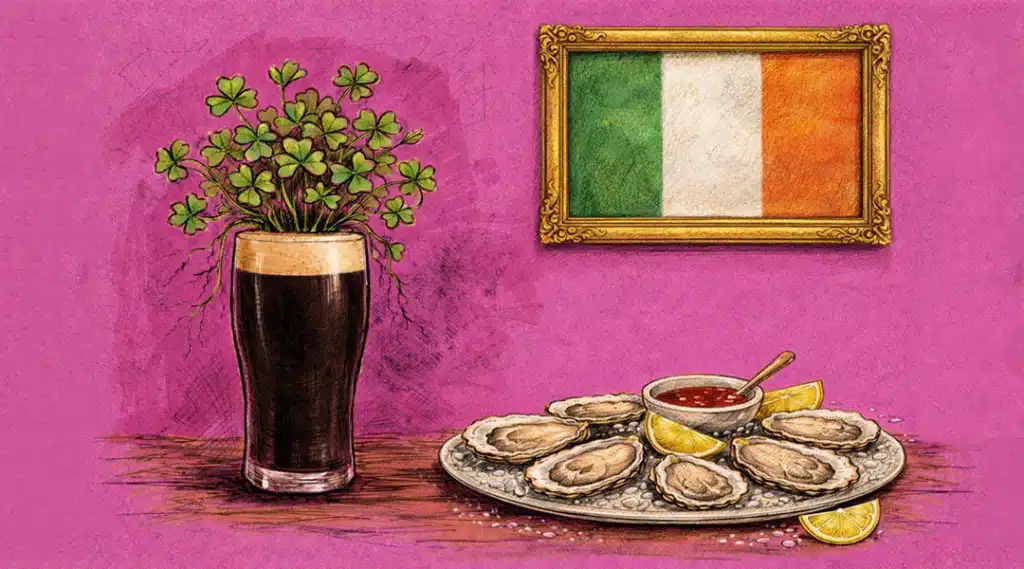
Every year on St. Patrick’s Day, people around the world celebrate Irish culture with music, laughter, good company, and of course, food and drink.
One of the most enduring traditions is enjoying a pint of Guinness – or two – often paired with oysters. This combination has long been associated with Irish pubs and coastal dining, with the creamy stout and the briny richness of oysters complementing each other perfectly.
While the pairing is steeped in tradition and taste, it also raises a common question often repeated in pubs today:
Is Guinness really good for you?
Guinness is an alcoholic drink, and as such, alcohol is classified as a toxic substance (a poison). The type of alcohol found in drinks is ethanol, which is psychoactive and biologically toxic. The key difference between a ‘poison’ and a ‘drink’ is largely the dose.
Over the years, various health claims – both substantiated and mythical – have been associated with Guinness. Much of this reputation stems from the brand’s famous advertising slogan, suggesting that ‘Guinness is good for you.’ However, it’s worth remembering that this messaging originated in an era when smoking was also promoted as part of a healthy lifestyle.
Does Guinness contain some beneficial compounds? Technically, yes. It contains small amounts of antioxidants derived from roasted barley and tends to have a slightly lower alcohol content than many craft beers. But these benefits exist in almost meaningless quantities. In the same way that low-tar cigarettes are considered ‘better’ than unfiltered ones, being healthier does not necessarily mean healthy.
Like most things in life, moderation is key. The occasional pint or two shared with friends is unlikely to do any harm. In fact, there is scientific evidence to show that socialising increases longevity, strengthens the immune system and may reduce the risks of conditions like heart disease, stroke and dementia.
The real nutritional star: Oysters
When it comes to oysters, however, the story is very different.
They are one of the most nutrient-dense foods available – despite being small and delicate, they are packed with essential vitamins and minerals that support overall health. A typical serving of approximately six medium oysters is a rich source of zinc, iron, selenium, iodine and vitamins B12 and D, while remaining relatively low in calories. They are also a good source of protein.
Key nutrients include:
Zinc: Oysters are the single richest natural food source of zinc, essential for immune function, wound healing, hormone production, and DNA synthesis.
Iron: Supports oxygen transport in the blood and helps prevent anaemia and fatigue.
Selenium: supports immune function, thyroid health, protection against cancer and heart disease and other aspects of health through its antioxidant activity.
Vitamin B12: essential for nerve health, brain function, and red blood cell formation.
Omega-3 fatty acids: essential for many aspects of health, both physical and mental, including the heart and brain.
High-quality protein: Contains all eight essential amino acids, which are the basic units from which proteins are made.
One reason oysters stand out nutritionally is their exceptional nutrient-to-calorie ratio.
A typical serving provides about:
- 50-70 calories
- 7-8g protein
- More than 500-1000% of daily zinc needs
- More than 100% of daily vitamin B12
That combination, very high micronutrients with very low calories, is what defines a nutrient-dense food.
A celebration of balance
So, while that pint of Guinness may be more about enjoyment and tradition than health benefits, the oysters on the plate bring genuine nutritional value to the celebration.
Perhaps that’s the real beauty of the St Patrick’s Day pairing – a balance between indulgence and nourishment. A creamy stout for the pleasure of the moment, and a plate of oysters delivering a plentiful dose of nutrients from the sea.
Enjoy the tradition, savour the flavour, and remember, as always, moderation is the key to keeping celebrations both joyful and healthy.